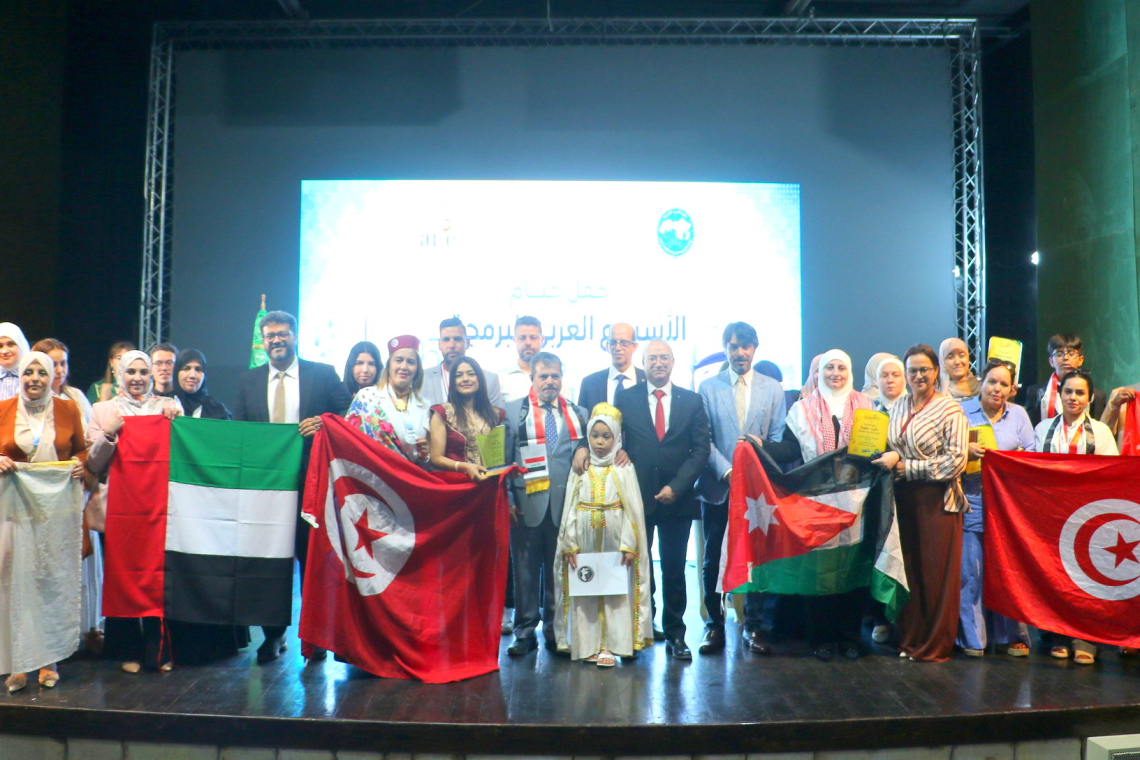
The Arab League Educational, Cultural and Scientific Organization (ICT Department), in collaboration with the Tunisian Association for Educational Initiatives, concluded the fifth edition of the “Arab Code Week” on June 11, 2026, in Yasmine Hammamet, Tunisia. This year’s edition was held under the theme “Artificial Intelligence and Programming in the Service of Arab Culture,” with participation from 18 Arab countries.
The fifth edition saw a new record in terms of participation, with more than three million students from across the Arab world taking part. Additionally, over 60,000 innovative projects competed across various contests and categories included in this leading Arab digital event.
Speaking on behalf of H.E. Dr. Mohamed Ould Amar, Director-General of ALECSO, Dr. Mohamed Jemni, Director of ICT, stressed that the continuous increase in the number of participants and submitted projects reflects the prominent status that the Arab Code Week has attained as an annual event for discovering Arab talents in programming and artificial intelligence. It also serves as a nurturing platform for innovators and creators among children and youth, and as a stimulating space for technological innovation and creativity in the Arab world.
This event, he noted, represents a valuable opportunity to develop innovative digital solutions and projects that serve Arab culture and contribute to preserving and promoting both tangible and intangible heritage. It also enables all age groups, including people with disabilities, to showcase their abilities and creativity through applications and digital projects that reflect the richness and diversity of Arab cultural heritage.
The closing ceremony featured an exhibition of Arab digital innovations and creations, where participants showcased their pioneering projects and experiences in programming, artificial intelligence, and machine learning. It also included interactive spaces and various workshops covering robotics, pottery, spinning, and other activities highlighting the integration of technology and culture.
During the event, Arab-level winners were announced, and outstanding project owners, teachers, educators, and winning schools were honored in recognition of their contributions to promoting the culture of programming and modern technology, as well as fostering innovation in the Arab educational environment.
Ms. Wided Rezgui, President of the Tunisian Association for Educational Initiatives, stated that the choice of “Artificial Intelligence and Programming in the Service of Arab Culture” as the theme of this year’s edition aligns with efforts to strengthen young people’s connection to their Arab cultural identity. She emphasized, in this regard, the importance of harnessing modern technologies and artificial intelligence to produce meaningful digital content that highlights the richness of Arab culture and contributes to its preservation and promotion.
The finals were attended by innovation champions from several Arab countries who reached the final stages of the competition. Remote participation was also made available for those unable to attend due to current circumstances and disruptions in some air travel, reflecting the organizers’ commitment to ensuring that all finalists could take part, present their projects, and have their achievements recognized.
The Arab Code Week was launched by ALECSO with the aim of promoting the culture of programming and modern technology among learners and educators in the Arab world. It continues to strengthen its position as a leading Arab initiative that contributes to developing future skills, enhancing cooperation and exchange of expertise in digital education, and supporting the building of an Arab knowledge society capable of keeping pace with technological transformations and achieving sustainable development goals.