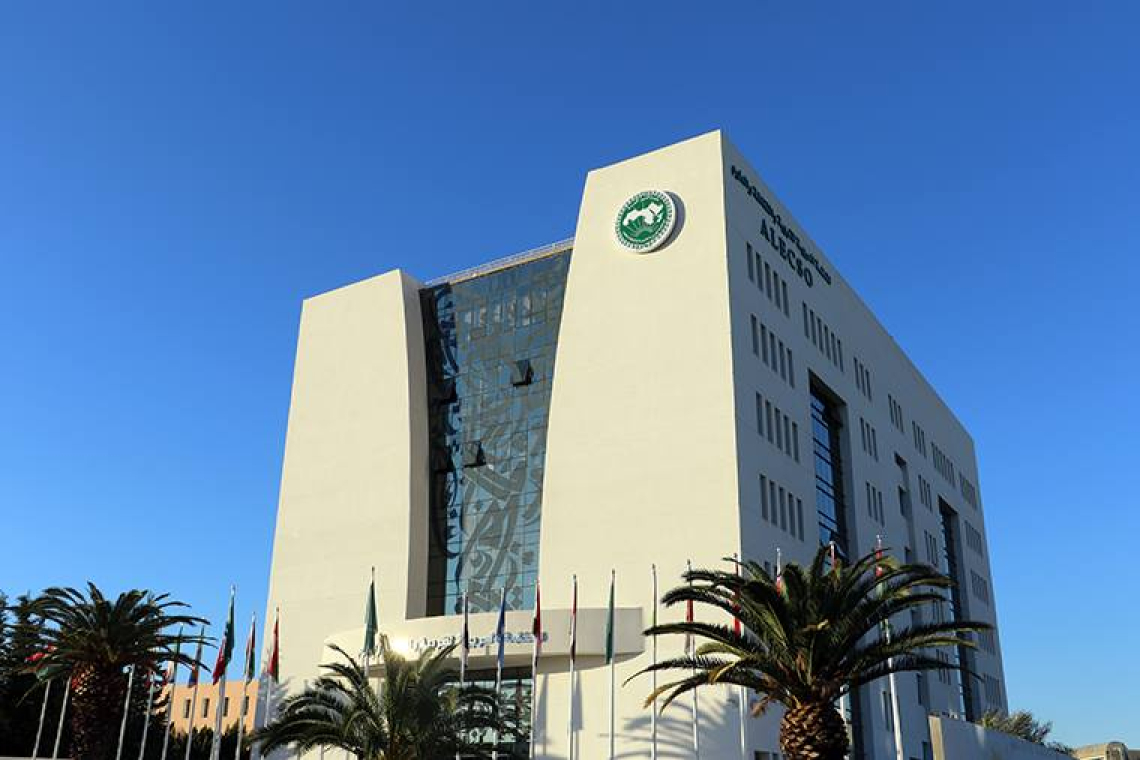
On January 8 of each year, the Arab League Educational, Cultural and Scientific Organization (ALECSO) commemorates “Arab Literacy Day”, a renewed opportunity to reaffirm its strong commitment to strengthening collective and individual awareness in Arab countries of the risks and challenges of illiteracy. Despite sustained efforts by governments, institutions, organizations, and individuals, illiteracy still persists, with millions of women and men in the Arab region still accounting for a significant proportion of the world’s illiterate population.
ALECSO considers this occasion an opportunity to deepen reflection on practical and sustainable solutions to the root causes that continue to hinder the eradication of illiteracy, most notably difficult access to quality education due to poverty, inadequate educational infrastructure, and geographical remoteness from learning institutions.
Consistent with its forward-looking vision aimed at renewing literacy approaches in the Arab world by leveraging the advances brought about by the technological revolution, ALECSO has chosen for this year the theme: “From Alphabet to Digital: Artificial Intelligence in the Service of Arab Knowledge.”
In this regard, reports by UNESCO and national statistical authorities indicate that countries which adopted distance-learning platforms during and after the COVID-19 pandemic have achieved faster progress in reducing illiteracy rates, particularly among young people aged 15–24.
Building on these findings, and in pursuit of the Sustainable Development Goals, Arab countries are seeking, as part of the Second Arab Literacy Decade (2025–2034), to reduce overall illiteracy to below 5% by 2030. ALECSO believes that achieving this goal now depends largely on the rational use of artificial intelligence, which has become a new driving force for learning.
ALECSO takes this opportunity to underscore the importance of adopting an Arab Strategy for Smart Learning, particularly in adult education and lifelong learning, with focus on:
- Expanding virtual education and AI-supported digital platforms capable of delivering personalized learning content tailored to learners’ abilities, pace, and needs, including the use of local dialects to simplify concepts;
- Employing intelligent diagnostic tools based on data analytics to identify groups at high risk of school dropout and enable early intervention to prevent illiteracy at its source;
- Integrating game-based learning applications into literacy programs to motivate adults to continue learning through smart devices.
Proceeding from this forward-looking vision, ALECSO emphasizes that an illiterate person is not someone in need of assistance, but rather an untapped human potential that AI can help unlock and empower.
ALECSO also calls for strengthening Arab cooperation and unconditional joint action in this field, as the most effective guarantee for transforming the “digital divide” into a “knowledge bridge” toward the future. Reading and writing constitute the foundation; artificial intelligence serves as a modern, systematic tool; and sustainable Arab development remains the ultimate objective.